


by: SEO Strategist
Ashot Nanayan
Updated December 27, 2025
7 min. read

WhatsApp
 (+1) 818 355 1889
WhatsApp
(+1) 818 355 1889
WhatsApp
(+1) 818 355 1889
WhatsApp
(+1) 818 355 1889
WhatsApp
(+1) 818 355 1889
It’s been a tough year. Challenges across multiple projects, the rise of AI search engines, shifting client behavior as more teams start double-checking their SEO playbooks, Google’s major SERP changes, keyword tracking headaches, and a dozen other issues that come with doing SEO.
At the same time, we’ve been hiring, building automations, and running constant tests; all with a small SEO team that really tries to keep clients happy every single day (even though that’s not always realistic).
After a lot of requests from clients, and plenty of people outside our client list too, I’m going to share the top SEO trends and predictions I’m seeing in 2026. If this article helps you, I’d appreciate it if you could share it with your audience. Ready? Let’s start.
In my own data and in the SEO statistics I’ve shared about how LLMs are impacting traditional search, this is the pattern that keeps repeating: the more people use tools like ChatGPT, Copilot, and Gemini to “pre-search,” the weirder and longer their final queries get when they land on Google.
A lot of those queries show zero search volume in Ahrefs or SEMrush.
But they bring money, my friend.
You can’t imagine how many clients we’ve closed where, when I ask, “By the way, how did you find us? What did you type?” they say something like:
Then I go check the keyword. Search volume: literally 0. But that one “zero-volume” query brought us a client with a four-figure or five-figure lifetime value.
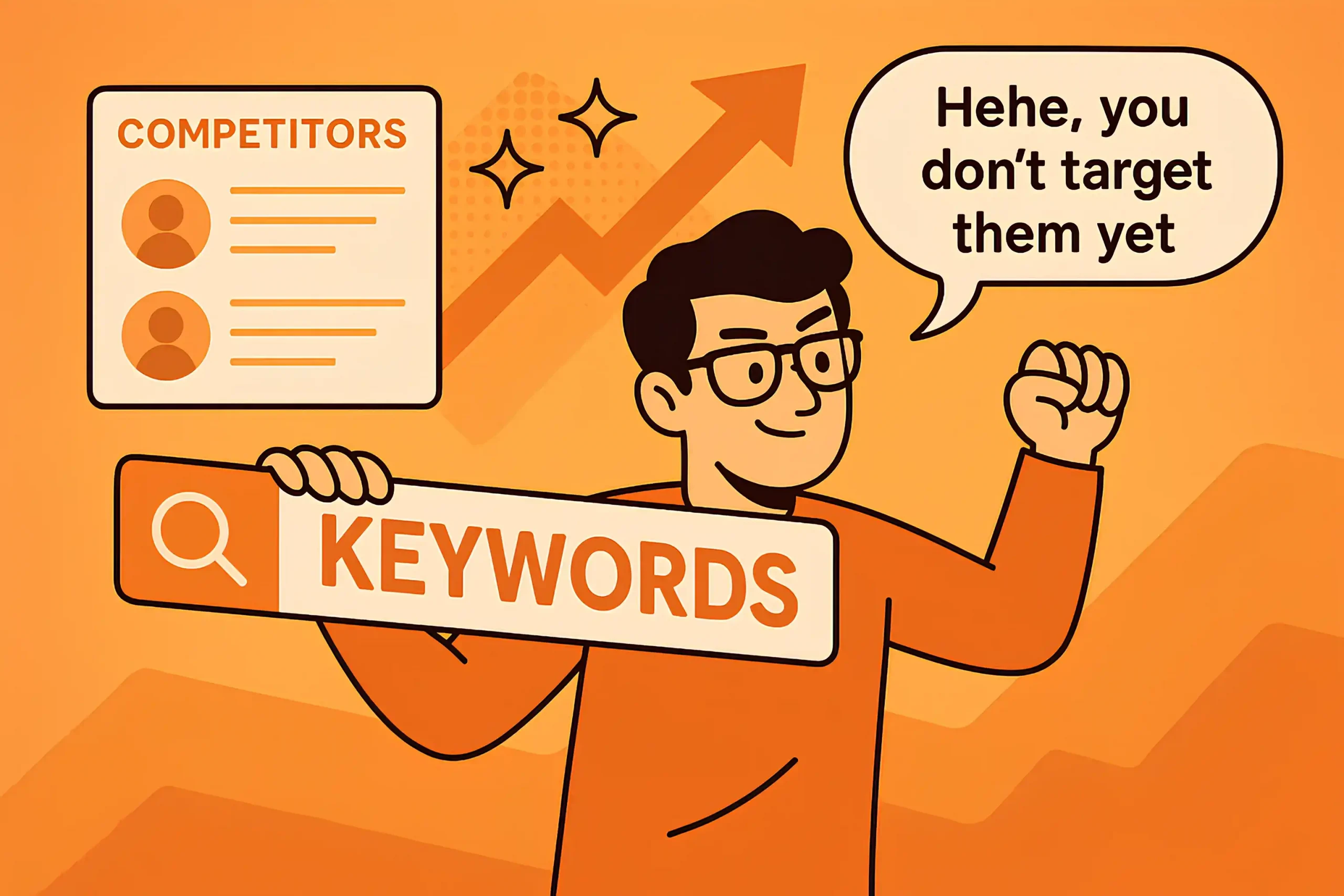
This is happening more and more in B2B SEO and B2B SaaS, especially. People don’t search “SEO agency” anymore. They search for things like:
In competitive niches, especially, targeting high-volume keywords is usually the fastest way to fail. When 50 big authority sites are already fighting for “SEO agency,” “project management software,” or “HIPAA compliant something,” you’re competing on budget, brand, and history.
That’s a hard fight to win, and honestly, most of the time it’s not even necessary.
What works much better for us is this:
Focus on the topics and phrases that make sense for your ideal customers, even if they show “0” in the tools. Ask yourself:
“If I were my own dream client, what would I type when I’m really stuck and ready to pay someone?”
I mean, instead of asking “What has volume?”, ask:
That’s where the low-hanging fruit really is now.
If you want to find these opportunities in practice, don’t limit yourself to keyword tools. There are a lot of places where these “silent” queries appear:
How people talk to LLMs: “Ask ChatGPT what someone in your situation would search on Google next.”
If you want to go deeper, I have a full guide where I walk through how I do keyword research from different angles, including how I think about LLM-driven queries and zero-volume keywords.
If you’re serious about catching this wave early, that guide is worth going through before you plan your next content roadmap.
In my complete guide on SaaS SEO, I already talked about this, but it’s becoming even clearer now: sooner or later, classic top-of-the-funnel (TOFU) blog posts will stop making sense for most businesses. For a lot of niches, I’d say easily 90%.
The internet is already flooded with generic “what is X” and “benefits of Y” articles, and AI search engines like ChatGPT or Gemini, plus Google’s AI overviews, are happily eating all of that surface-level content.
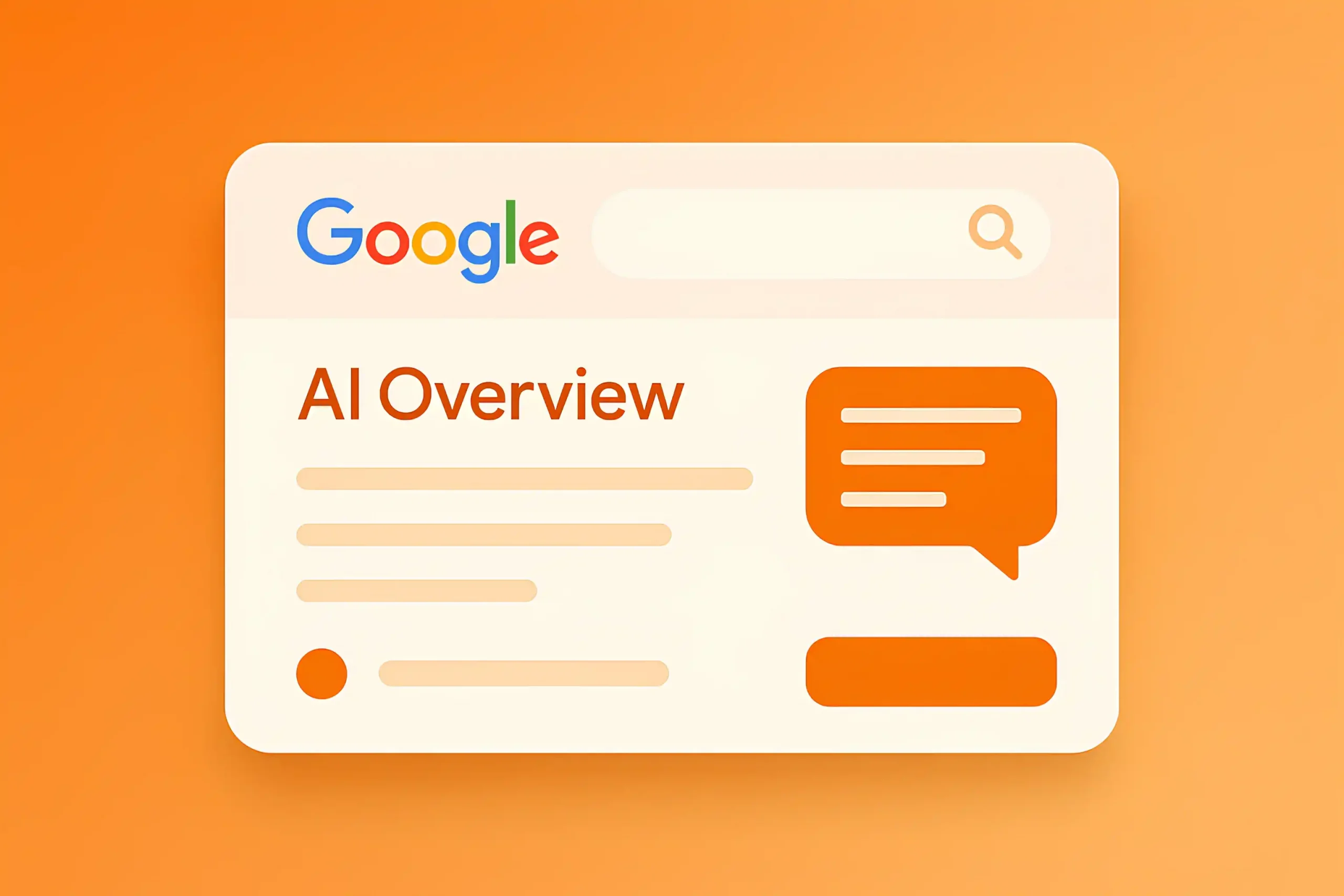
You can already see it in the way people behave. They type a question, skim the AI overview or the short answer box, and don’t even bother scrolling down to click the organic results.
If your entire content strategy is developed around answering basic questions that AI can summarize in two sentences, you’re training yourself to be invisible.
What people want now is not just “information” but evidence that you know what you’re doing. They want to feel your expertise, your mistakes, your wins, and your own research.
When someone is serious about buying, they don’t care that you wrote the tenth article about “what is link-building.” They care that you can show how you recovered traffic after a migration, doubled sign-ups for a niche SaaS, or helped a healthcare company grow without breaking compliance.
That’s why I’m pushing clients away from pure TOFU and into more middle-of-the-funnel and bottom-of-the-funnel content.
Things like in-depth comparisons, “X vs Y” breakdowns, alternatives pages, use-case specific product pages, deep product reviews, decision guides, migration stories, and real case studies.
This is what people people look for when they’re shortlisting options, asking “who should I trust?”, and trying to justify a decision to their team or their boss.
People ask detailed questions in AI tools (I personally do), they get a shortlist of brands or solutions, and then they go to Google to double-check whether those brands look serious.
If your content doesn’t help them make that decision, AI overviews will happily answer the rest without sending them to you.
So my recommendation is: stop writing content just to “capture traffic at the top.” Start writing for the moment your ideal buyer is choosing. Show them your thinking, your process, your product in action, and where you stand against the alternatives.
That’s where SEO is heading in 2026, and the brands that understand this shift early will be the ones that still get serious leads while everyone else is stuck feeding AI with free, generic content.
When I look at search results today, this is one of the things that honestly hurts the most. If I open 20 random articles for a topic, in many niches, at least 15 of them clearly look like they were generated in a few minutes with no real expertise behind them.
Same structure, same safe sentences, no real numbers, no real story, nothing that shows the author has done what they’re talking about.
The worst part is that some of them are still ranking.
I’m not talking about content where someone uses AI as a helper but adds their own experience, data, and opinion on top. I’m talking about pieces that could be about any product, any country, any industry; just swapped keywords.
Meanwhile, I’ve had cases where I sit down, write something based on real projects, SEO migrations, failures, and results, and it still struggles to rank because my domain is not as strong as some giant content farm.
That’s a huge pain point for me, and I know a lot of good SEOs feel the same.
Despite everything Google says about experience and expertise being important, right now, I still see a lot of misses. There are so many “template” articles with zero hands-on insight that somehow outrank content written by people who do this work day to day.
So when I say I believe 2026 will be a turning point, it’s not because I think Google is perfect today. It’s actually the opposite: the current situation doesn’t match their own narrative, and that gap can’t stay this wide forever.
Also read: LLM SEO Trends in 2026
LLMs are a big part of why I think this will change. Models are getting better at detecting patterns that humans don’t even consciously see. A generic article usually has predictable wording, shallow explanations, and nothing unique to tie it to a person or brand.
True expert content feels different: it has specific examples, real constraints, trade-offs, numbers that don’t look made up, and sometimes even honest “this didn’t work for us” moments.
Such nuance is much easier for LLMs to recognize than for old-school ranking signals alone.
As more search experiences are powered or influenced by LLMs, I expect them to lean harder into those signals of real experience.
So yes, for now, it’s still frustrating when I see my in-depth piece losing to a shallow article on a stronger domain. But long term, I’m not betting on generic AI content.
I’m betting on people who know what they’re talking about, documenting their work, their case studies, their research, and their point of view.
The days when you could build your entire plan around “ranking on Google” are pretty much over. I know it sounds strange coming from someone who lives in SEO, but this is what I’m seeing with my own website and my clients.
Right now, our site is getting over 2,000 visits a month. But if you look only at Google, you’d probably think we’re barely visible. For some reason, Google is still a bit conservative with us.
At the same time, we’re getting discovered through ChatGPT, Copilot, Bing, Baidu, and a bunch of other AI-driven and traditional search engines.
This is why I don’t treat “Google rankings” as the final truth anymore.
People are already searching everywhere. They ask questions in ChatGPT. They use Copilot inside their browser. They search in Bing because it’s built into Windows.
They search on Baidu because of their market. I mean, they still use classic engines, but not as their only source. If your brand only exists in Google’s organic results, you’re already behind.
You just don’t feel it yet because your analytics still look “fine.”
If you want to win the top spots in 2026 and beyond, you have to think in terms of “search everywhere,” not just “SEO for Google.”
That means making sure your brand and content appear in multiple places: your website, YouTube, LinkedIn, relevant forums or communities, maybe even niche platforms your audience uses daily.
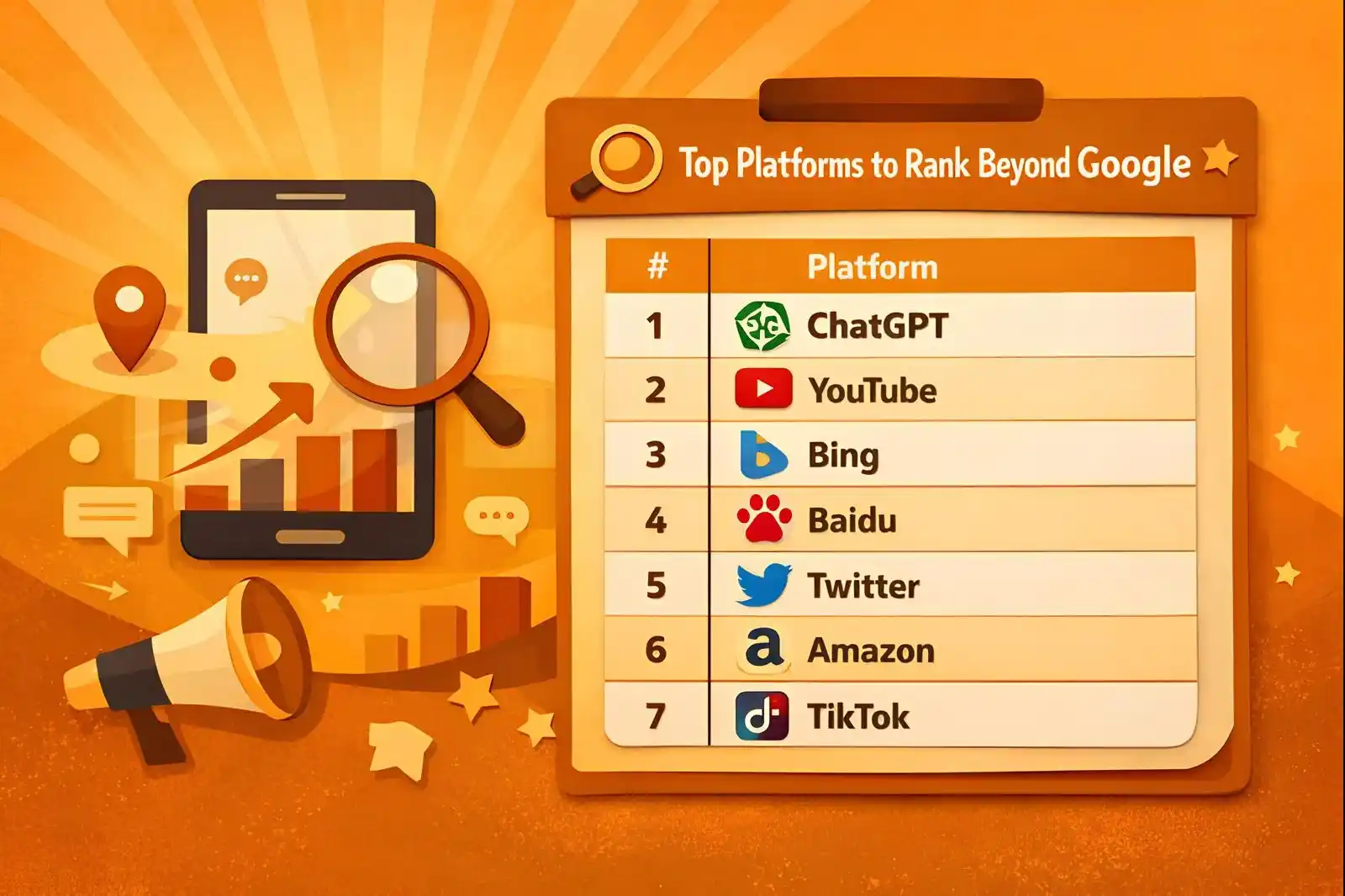
When someone asks ChatGPT to “recommend a good SaaS SEO agency,” you want to be one of the names it knows. When they double-check in Bing or another engine, your site should be technically ready and easy to crawl there as well.
On the technical side, this also means stopping the habit of optimizing only for Googlebot. Your robots.txt, XML sitemaps, hreflang, and general technical setup should be clean for Bing, Baidu, and even Yandex if you’re dealing with Russian-speaking markets.
If you’re doing international SEO, or you’re in B2B or SaaS where decision makers search from different regions and systems, you simply can’t ignore these other players anymore.
They may each give you “only” a fraction of the traffic, but together they often bring the exact type of users who are ready to take action.
So when I say, “ranking for Google alone won’t be a real strategy,” I don’t mean Google stops mattering.
It will always matter. I mean that your growth and your lead generation should not depend on one single gatekeeper.
The brands that will feel safe in 2026 are the ones that build visibility across multiple search engines, LLM-based tools, and platforms where people spend time and ask questions.
Google can like you or not in a specific month. But if people can still find you through ChatGPT, Bing, Baidu, YouTube, LinkedIn, and other places, your business is not tied to one algorithm mood swing.
Don’t argue with me on this one, because I’m still seeing it every week. A lot of sites in very serious niches are aggressively using PBNs, link farms, and all kinds of obviously manufactured links, and they’re not only getting away with it, but they’re sitting comfortably in the top spots with no visible penalties or traffic drops.
When you do SEO the right way, this is honestly one of the most frustrating things to watch.
It becomes even more painful when we talk to potential clients. As an SEO agency, we approach our work with a more serious mindset, a cleaner strategy, and, of course, slightly higher costs, because good work and safe link-building can’t be “10x cheaper.”
Then the client says, “But this other agency promised 100 links for a fraction of your price, why are you so expensive?” In many cases, they don’t really understand what a PBN is, what a link farm is, or why that’s risky.
All they see is: it seems to work right now, and it’s cheaper. From their point of view, that’s enough.
I get why they think that way, but this is where I’m quite optimistic about where 2026 is heading.
Especially in YMYL niches: finance, healthcare, law, medical products, anything that touches people’s health or money, I don’t think this type of generic, mass-produced link building has a long future.
These are the areas where Google cannot afford to keep rewarding websites that rely on “who can buy the most PBN links this month.” It doesn’t match what they publicly say about safety and trust, and sooner or later that gap has to close.
Also read: How to Earn PR Backlinks
I believe Google will put much more effort into killing off these links in sensitive verticals.
Maybe some of them will still work for a while in low-risk niches, but when we talk about YMYL, I expect PBN-heavy backlink profiles and link farms to become a long-term liability.
The risk–reward ratio will shift. Right now, it’s still attractive because people see results. But in a stricter environment, one manual review or one strong update can easily wipe out years of cheap gains.
That’s why, in these niches, I keep pushing clients toward higher-quality link-building strategies, even if they’re slower and less “cool” to sell.
Things like HARO and similar journalist platforms, digital PR, linkable assets that people want to reference, high-quality resources, research-based content, real partnerships, and mentions on trusted industry sites.
Maybe I do want to see the good side of things here, but this is really where I think we’re heading.
In 2026, generic link-building across sensitive and YMYL niches won’t just be “not ideal” – it will start to backfire, and the websites that took the slower, more expensive but safer route with authority links will be the ones still standing while the quick-win projects quietly disappear from page one.
Right now, a lot of tools are trying to convince us that they can already track “LLM visibility” and “AI traffic.” You see dashboards from SEMrush, Ahrefs, and a bunch of new platforms claiming they can show how often your site appears in AI answers, how many prompts mention your brand, and how much traffic you’re getting from different AIs.
Honestly, when I compare that with my own analytics and what I see, I wouldn’t call it accurate. You get some hints, some trends, but not numbers you can trust when you’re making decisions or reporting to a client.
Also read: SEO Audit Checklist for LLMs
Sometimes I see clear signs that we’re getting leads that started from ChatGPT or another AI assistant, but the tools either miss it completely or show some blurry, “estimated” curve that doesn’t line up with reality.
This is why one of my biggest predictions for 2026 is that we’ll finally get an official way to track this.
Either from Google itself in the form of a new report for AI overviews and Gemini traffic, or from LLM platforms like ChatGPT and others offering proper visibility dashboards.
Something similar to what Search Console did for organic search years ago, but now for AI-driven search: impressions, clicks, mentions, maybe even which answers or “cards” you appeared in.
I’m not saying I know how it will look, but I don’t think the current “guesswork stage” can last forever. Too many businesses are already getting discovered through AI answers.
Too many marketers are trying to measure something they can’t properly see. At some point, the pressure will be big enough that one of these major players will have to say, “Okay, here’s the official way to track your AI visibility.”
Finding a truly good SEO consultant is already hard work today. You can easily find someone who knows how to sort keywords by volume or filter them by “keyword difficulty score (KD) under 20.”
But someone who understands how people search in 2026, across Google, ChatGPT, Copilot, Gemini, and everything else, that’s a different league.
I’m pretty sure that very soon, a lot of companies will start asking specifically for SEO consultants experienced in LLM keyword research, not just “classic keyword research.”
It’s not just about “what do they type into Google,” but “what do they ask ChatGPT first, and what would they search after that when they are ready to choose a tool, book a demo or hire someone?”
Especially if you’re doing SaaS keyword research, this is going to be a huge advantage. A typical SaaS buyer doesn’t just search “project management software” anymore.
They ask questions like “what’s a good project management tool for a 10-person remote marketing team with client approvals” or “which SEO tools are best for agencies that handle migrations and technical audits.”
We’re already seeing early hints of this shift. Some tools, including things like AnswerThePublic and a few newer platforms, are starting to surface questions and prompt-like phrases that clearly come from LLM usage patterns.
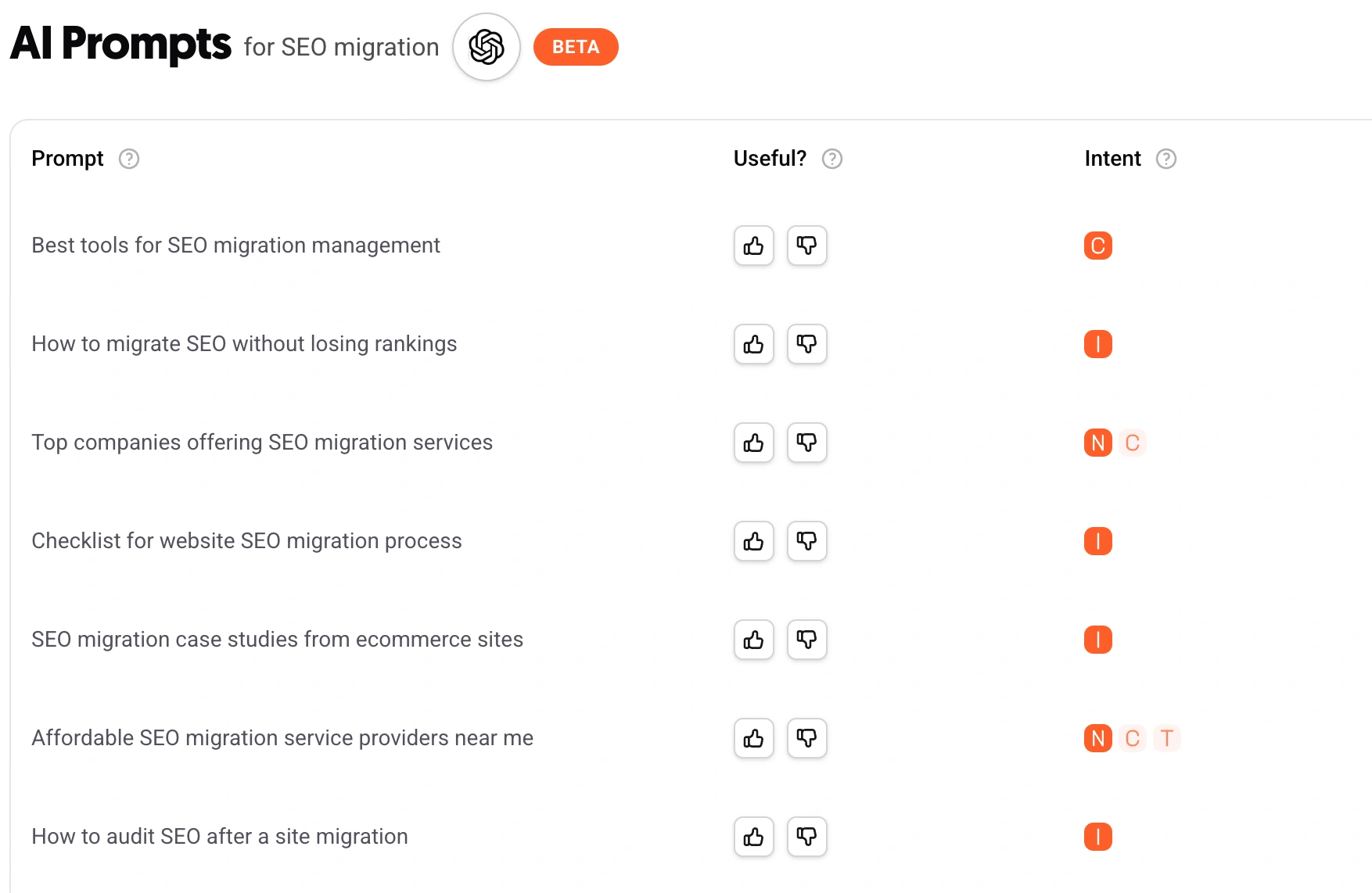
They’re not perfect, but you can tell where things are heading.
In 2026, I expect this kind of data to get much deeper and more connected: more insight into how people phrase their problems, what contexts they add, and how those “LLM-style” questions overlap with traditional queries.
Everyone loves to talk about “200+ ranking factors” and all that, but I really believe that in 2026, your brand itself will sit very close to the top of that list, both in classic search and in LLM-style search.
I don’t mean brand in the old-school “just have a logo and a domain” sense. I’m talking about whether people know you, search for you, talk about you, and trust you.
When I look at how things are evolving, it’s pretty clear that simple on-page SEO tricks and random backlinks are losing power compared to real brand signals.
If more people are searching for your brand name, if users actively look for “[your brand] + reviews,” “[your brand] + pricing,” “[your brand] + alternatives,” that tells search engines something very important: you exist in people’s heads before they even start the query.
That’s an insanely strong signal you cannot fake with a few guest posts.
In my opinion, this is going to change how SEO is done at a deeper level. It’s not just about “optimizing pages” anymore. It’s about building a company that behaves like a real brand: a clear point of view, strong service, visible experts, real relationships, and a track record that appear everywhere online.
If your name means something in your niche, every other signal becomes easier. If your name means nothing, all the tricks will only carry you so far.
In this guide, I shared the main SEO trends and predictions I’m seeing for 2026 after all these Google, AI, and LLM shifts. Some of them might play out exactly like this, some of them might take longer, and some might surprise us differently. Whether I’m right or wrong, we’ll see in 2027.
But one thing I’m sure about: we’re still at the beginning of this change. The way traditional search engines and AI-driven platforms work is going to keep evolving, and I think they’ll surprise all of us more than once in the next couple of years.
Meanwhile, if you’re looking for an SEO agency that lives in this new reality and not in the old playbook, just reach out to Digital World Institute.
We’re trusted by hundreds of brands, from SaaS and eCommerce to more complex B2B companies. Book a quick consultation, and we’ll walk you through how we can help your brand appear in AI overviews, inside LLM recommendations, and in traditional search, not just with “traffic,” but with the visibility that brings high-quality leads and customers.
