


by: SEO Strategist
Ashot Nanayan
Updated December 3, 2025
7 min. read

WhatsApp
 (+1) 818 355 1889
WhatsApp
(+1) 818 355 1889
WhatsApp
(+1) 818 355 1889
WhatsApp
(+1) 818 355 1889
WhatsApp
(+1) 818 355 1889
Believe it or not, position “1–10” is no longer the full picture, and yeah, AI Overviews, ChatGPT, Gemini, Perplexity, and others change the search experience. Over the last months, our team has tried a bit of everything. Some things worked great on a few sites, then completely failed on others, even when we did almost the same thing.
However, after a lot of testing (and a few disappointments), we’ve found a handful of checks and tactics that keep working across different projects, at least today. So I decided to put them together and show you how I audit a website specifically for LLM visibility.
If you’re looking for AI SEO audit services, reach out, and we’ll put together a custom proposal for your site.
Every week, someone asks me, “How do I know if my pages are even seen by these AI engines? Do they crawl the same way Google does? Do I need some special setup just for ChatGPT or Gemini?”
So, most of these large language model systems rely on the public web, and the way they discover content is still tied to normal crawling patterns. They’re not reinventing the wheel. If Google, Bing, and other major crawlers can reach and understand your pages, LLMs usually can, too.
The thing is that LLMs also tap into different data sources: snapshots, licensed datasets, curated feeds, so you’re not dealing with one single index as you do with Google.
A big myth I hear is that “LLMs read everything even if it’s not indexed.” No, if your content isn’t discoverable on the open web, or it lives behind a login, or it’s blocked by robots.txt, it’s basically invisible to them.
Another myth is that you need to “submit” pages to AI engines separately. You don’t. There’s no special submission portal. Fix the fundamentals, and you’re already ahead.
For best practices, keep it simple:
Make your content easy to reach. Keep URL structures clean. Use internal links that help crawlers move around. Make sure every important page can be reached within a few clicks.
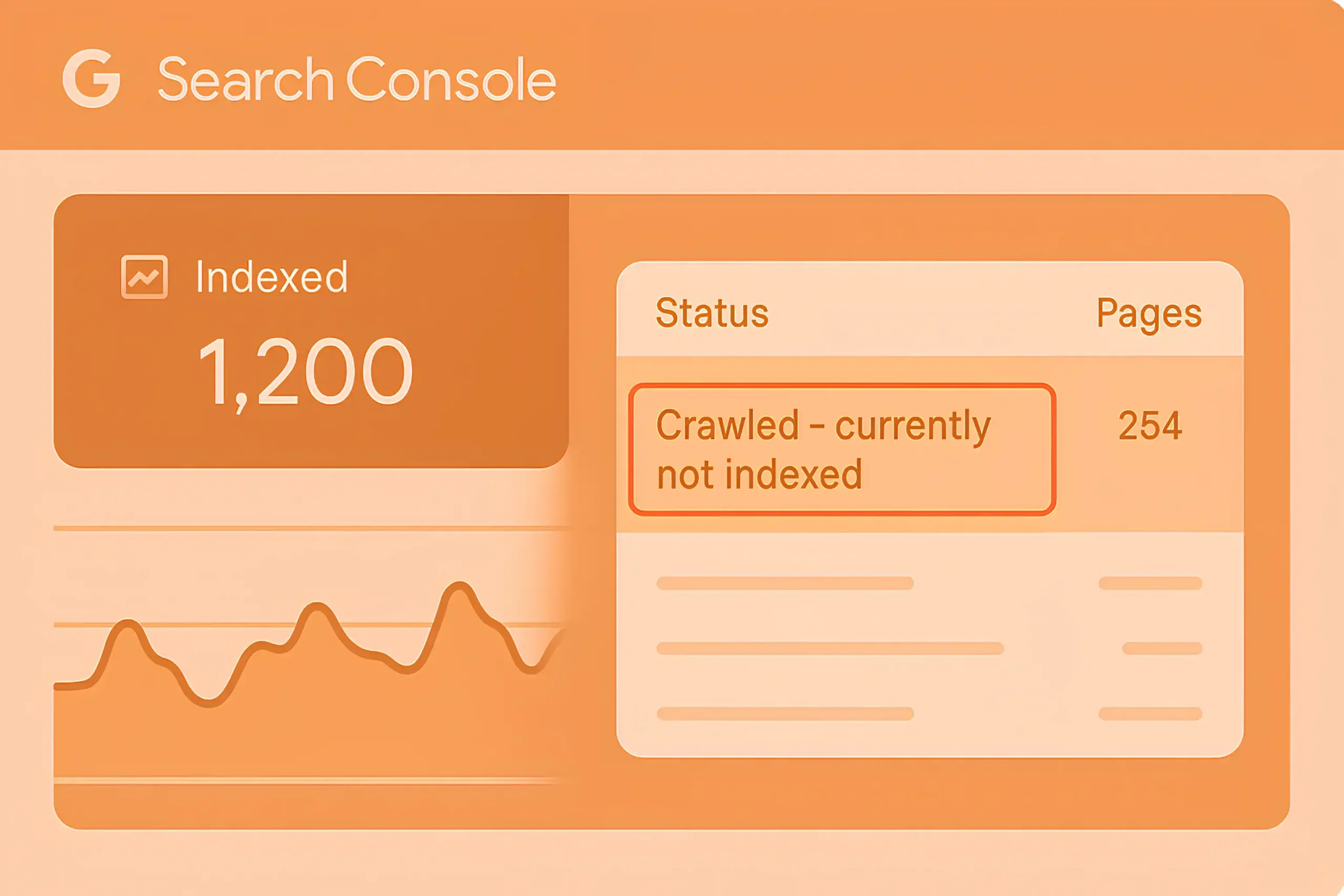
Check your index coverage regularly; if Google struggles to index your site, that’s usually a red flag for your LLM visibility as well.
If your crawlability and indexing are healthy, the rest of your LLM audit becomes ten times easier. Everything downstream: entity clarity, content quality, freshness, and structured data, depends on this foundation.
Related article: How to Fix ‘Crawled – Currently Not Indexed’ in GSC
If you’ve read my LLM optimization for SaaS businesses guide, you already know this is one of the top three factors that decide whether your brand appears in AI search. But I’ll repeat it here because it’s that important: first-party experience signals are becoming the new currency of visibility.
Remember, these models can eat generic content faster than any of us can write it. They’ve already seen every “What is X?” and “Top 10 benefits of Y” article on the internet. So if you want ChatGPT, Perplexity, Gemini, and all the other AI engines to surface your brand in their answers, you have to give them something they can’t recreate on their own.
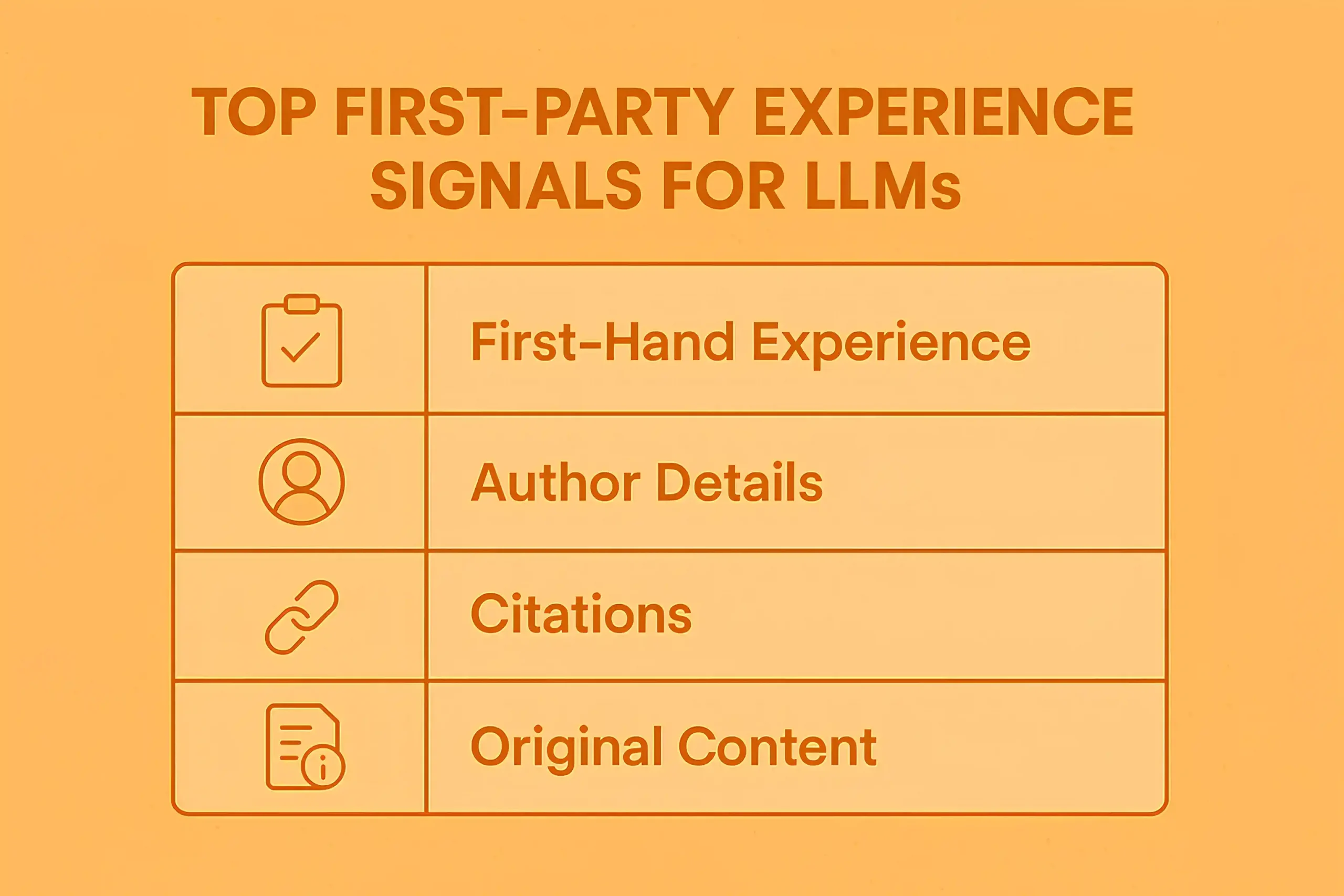
I mean real data, your own case studies, screenshots, maybe product results, internal numbers, client stories, experiments, failures, insights; anything that only you can provide.
But of course, outside signals matter too. A solid author identity, a clean author bio, public interviews, and good guest posts on reputable sites; all of these are very important.
External mentions, brand citations, niche publications, industry quotes… every piece of this builds your “AI reputation” in a way generic blogs never can.
So in the audit, the second thing I check is:
Did you publish something real, or did you publish something anyone could recreate in 30 seconds? Please understand, no matter how good your on-page SEO is, you won’t win meaningful LLM visibility without first-hand experience baked into your content.
A lot of people assume LLMs “read” content in some mysterious, completely different way compared to Google or other traditional search engines. I hear this all the time: “Should I rewrite everything for AI search?” or “Do I need special formatting rules just for LLMs?”
Folks, I’m going to disappoint you a little: both traditional search engines and AI systems process content in very similar ways. They’re both trying to understand your page, break it into digestible pieces, and extract meaning without friction.

Yes, you’ll hear advice like “keep paragraphs under five lines,” “follow semantic headings,” “use short summary blocks,” and so on.
Don’t get me wrong, all of that is good advice. It makes content easier for any system (or human) to parse. However, everything you already know about great content structure for Google still applies to LLMs.
When I audit a client’s content for LLM readiness, I’m not only checking the usual things like headings, flow, clarity, and hierarchy.
I’m looking for signs that there’s something real inside the page: examples, analogies, short scenarios, use cases, tables, screenshots, maybe even GIFs or lightweight animations if the page allows it.
If you’re referencing studies or research, point to the actual primary sources. If you’re explaining a process, walk through it with a real scenario. If you’re giving tips, show what it looks like in practice. These are the small details that make your content “LLM-friendly” without forcing you to create some strange new format.
So during this part of the audit, my job is to figure out whether your content is structured well and whether it carries enough depth to matter.
If it reads like a generic article anyone could rebuild in a few minutes, it won’t hold up. If it reads like something written by someone who’s actually done the work, LLMs and traditional search engines will treat it with more trust.
I’ll be completely honest here: the tricks that sometimes temporarily work in traditional SEO don’t work well with LLMs. You can still push the needle a little with guest posts, niche edits, or even the occasional PBN-style placement in Google (even though Google is the smartest system we deal with), but LLMs don’t respond to that stuff at all.
ChatGPT, Perplexity, Gemini, Claude; these systems rely on trust, which means they pull from cleaner, more authoritative parts of the web. They’re not scanning random link farms or low-quality placements. They’re relying on recognizable sources, established sites, and verified signals that prove your brand exists and has relevance in the real world.
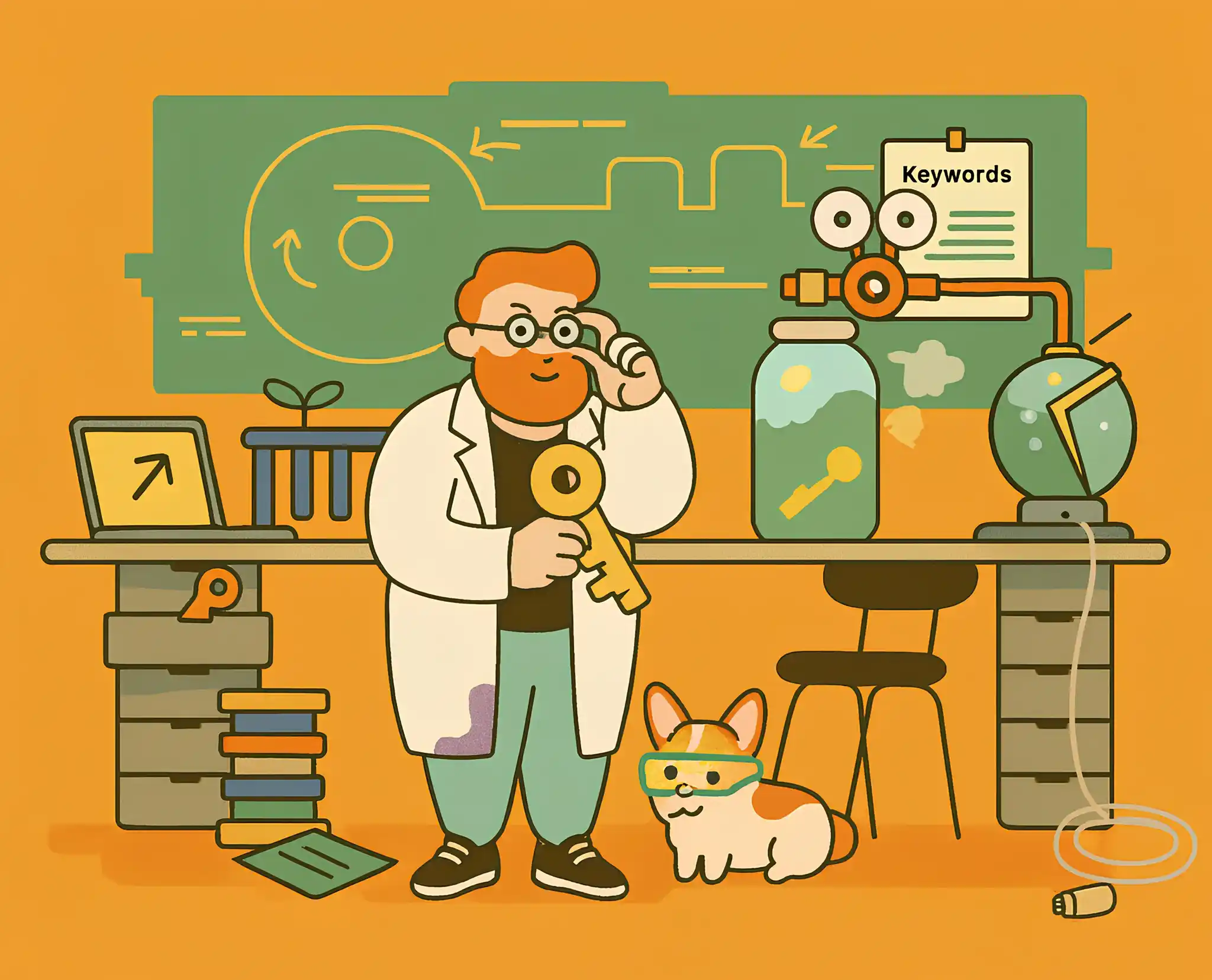
This is why branded anchor text, brand mentions on strong websites, digital PR, HARO, podcasts, and interviews; these things are important a lot more. LLMs need a stable web footprint to connect your brand name to your expertise.
One thing I’ve found extremely helpful is appearing in topical articles. Not generic “lifestyle listicles,” but actual pieces that are connected to your industry.
Especially, if you’re doing SEO for ChatGPT visibility specifically, this is gold. When LLMs see your brand inside multiple authoritative, topic-aligned contexts, they build a much stronger association.
Here is my list:
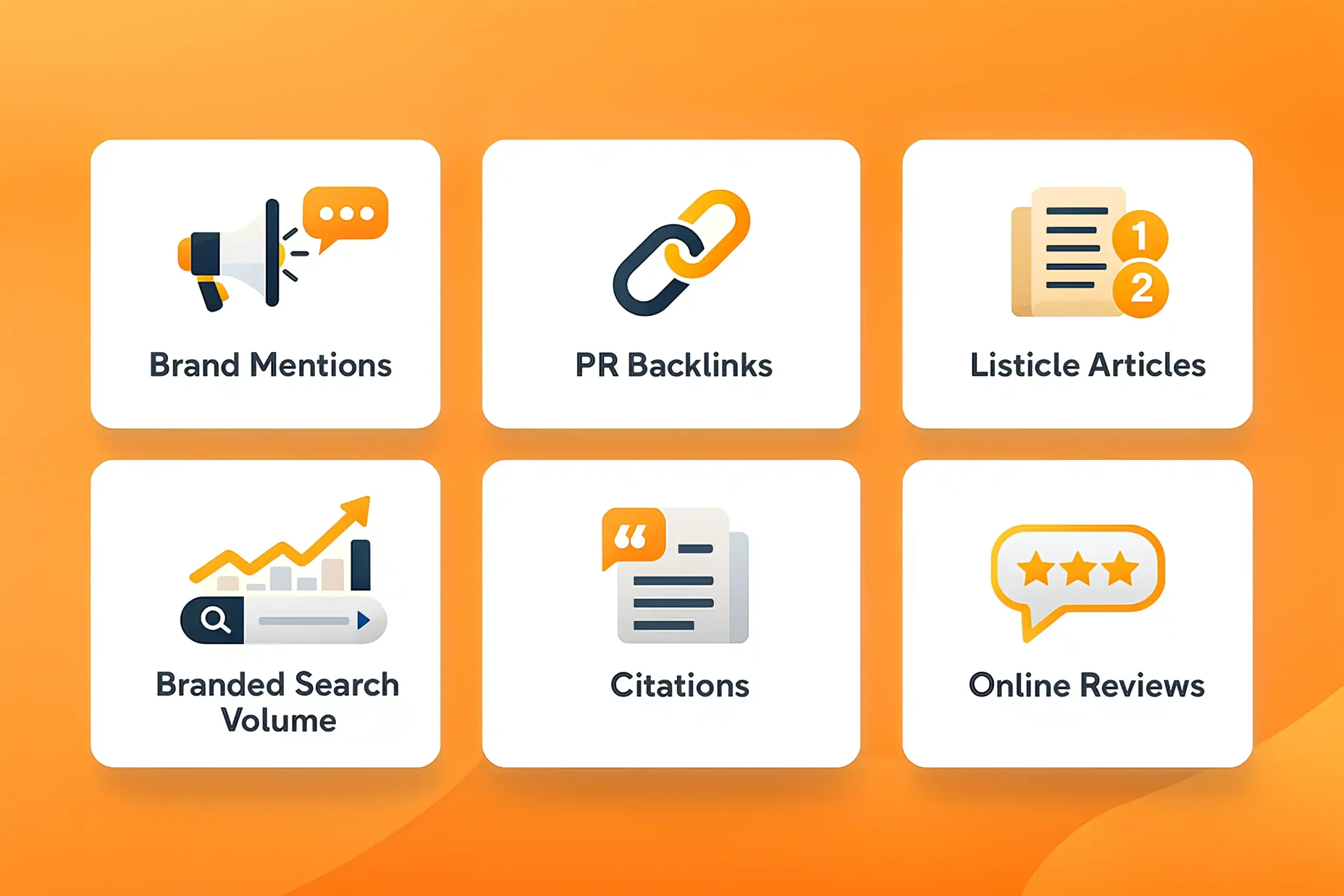
But don’t underestimate the softer trust signals either:
Social proof, testimonials, founder visibility, press features, conference talks, and even LinkedIn authority. These aren’t “ranking factors” in the old-school SEO sense, but they absolutely influence how LLMs interpret your brand’s weight and reliability.
According to statistics, across millions of keywords, AI Overviews now appear on roughly 13% of Google searches. Thirteen percent may not sound huge at first, but if you run SEO for actual businesses every day, you already know what it means.
It means impressions suddenly go up, CTR goes down, and top-of-the-funnel content starts losing the visibility it used to own.
Whether we like it or not, it’s changing how content performs, and in some cases, it forces us to rethink our entire content strategy from scratch.
On the other hand, and this is the part most SEOs don’t talk about, AI Overviews can send high-quality and relevant traffic.
I recently shared a case study where one of my client projects generated over 6,000 visits from AI Overviews alone. There were specific patterns, and once you understand them, you can audit your own content with the same logic.
Here is my SEO audit checklist specifically for AI Overviews:
| Area | AI Overview Check | Priority | Status |
|---|---|---|---|
| Answer block | Page opens with a direct, 2–5 sentence answer to the core question (AIO-ready snippet | High | ✓⃝ |
| Sub-questions | H2/H3s cover the same sub-questions AI Overview shows (e.g. “Is it safe?”, “Who is it for?”, “Best options?”). | High | ✓⃝ |
| Consensus & entities | Content reflects consensus points + key entities (brands, ingredients, methods) that appear inside current AI Overview. | Average | ✓⃝ |
| E-E-A-T & safety | For YMYL topics, claims are moderate, sourced, and safe (no “guaranteed”, no extreme promises, clear disclaimers). | Average | ✓⃝ |
| AIO presence | For target queries, your domain is cited in AI Overview sources or you’ve benchmarked against those who are. | Average | ✓⃝ |
I don’t know how other people handle this part, but personally, I’m an idealist. Yep, this mindset has cost me clients more than once. Whenever someone asks me to “just produce something quick,” or “create some generic content so the site looks active,” I simply can’t do it.
If you can’t afford great content right now, I’d rather tell you to wait. Meanwhile, other SEO agencies accept the job and publish whatever generic thing fills the page.
So, maybe I sound old-school here, but my rule is simple: no low-quality content, ever.
To enforce that, I don’t rely on content scoring tools like SurferSEO or “keyword density dashboards” that pretend to measure quality. All that stuff is noise. It doesn’t reflect expertise, originality, or actual usefulness.
It just rewards sameness. My process is different:
First, I pull every important URL from the XML sitemap into a sheet.
This gives me a clean master list of pages that Google and LLMs can discover, so I’m not guessing which parts of the site to analyze.
Then I go page by page and quickly assess the core elements: topic, depth, structure, entities, and how clearly it answers real questions.
Here I’m asking, “Would a model confidently quote this page as a source?” or “Is this just generic, replaceable content?”
After the review, I group pages into buckets: keep as-is, update, rewrite, or merge/remove.
I prioritize based on business value (money pages, key topics), traffic potential, and how close each page is to being “LLM-friendly” with clear answers and strong topical signals.
Finally, I start updating the highest-priority pages: tightening the angle, adding missing sections, clarifying answers, improving formatting, and aligning entities/terms.
The goal is to make every updated URL a strong candidate to be cited in Google results and in AI/LLM answers.
When I audit a website for what I call the “anti-AI content flux,” I export every URL from the sitemap, and I go through them one by one.
I read the content myself, exactly the way a human would.
If a page is thin, generic, outdated, rewritten five times, or says nothing meaningful, I mark it. If a page exists only because someone felt pressured to “publish something this week,” I mark it.
Yeah, of course it takes hours, sometimes days. But it’s the only way to create a clean signal. You can’t expect AI engines to highlight your best content if your site is buried under content that shouldn’t exist.
When you remove the B.S. content, rewrite the weak parts, and elevate the pages that carry real value, you give Google and AI engines a clear message: “These are the pages that matter.” Once that signal is clean, everything else: rankings, AI answers, link value, internal authority, starts working in your favor.
Of course, it would be amazing to generate traffic the way Forbes, Healthline, or other huge publishers do. I’m not against big numbers. But when I work with clients, especially in SaaS SEO and B2B, I try to keep things realistic. Most of them don’t need “millions of impressions from AI search.” They need the right people to discover them at the right moment and get in touch.
For me, real success in AI search looks very simple: Your brand appears when someone asks ChatGPT, Gemini, Perplexity, or any other AI tool for the best solution in your category: best SEO agency, best AI video tool, best payroll platform, best X for Y.

If AI search can send you steady, qualified leads, a few good demo requests, sales calls, or inbound messages every month from people who “found you in ChatGPT” or saw your name in an AI-generated list, that’s already a huge win.
That’s what I aim for with my own projects and with my clients. Everything in this audit is basically built to move you closer to that point.
If you’re looking for results-driven AI SEO services trusted by serious brands in competitive industries, get in touch with us, and we’ll map out what this could look like for you.
Right now, checking your visibility in AI answers is still a bit of a mess. There’s no one clean dashboard where you log in and see “You appeared in ChatGPT 27 times this week.” So I use a mix of tools, a bit of detective work, and a lot of common sense.
I’m sure a lot of experts bounce between Ahrefs and Semrush. You know what, both of them are trying to track AI-style results and new SERP features, but none of this is perfect; it just gives a direction: “Okay, these topics are touched by AI, these are still more old-school SEO.”
Personally, I rely on Google Analytics to get a broad picture:
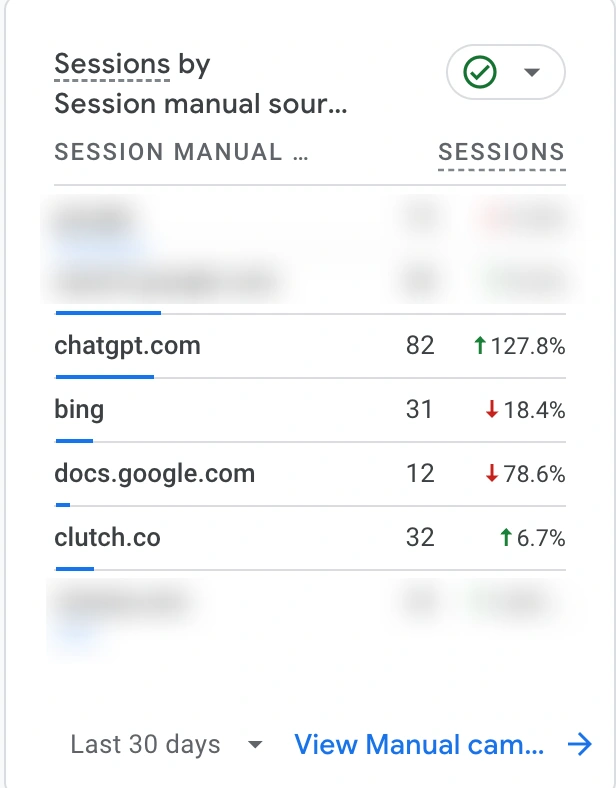
For AI Overviews, it’s mostly Search Console and pattern-spotting. I watch keywords where I know AI Overviews are active, and then I look at impressions vs. clicks.
If impressions shoot up and CTR quietly drops, that’s usually a sign Google is answering the query before people reach your site.
Then I dig into which pages are being shown, whether they look “summarizable,” and if they’re strong candidates to be pulled into the overview.
There are already tons of tools trying to “measure” AI visibility, from crazy expensive platforms to small indie products. I test a lot of them, but I treat everything as directional.
Nothing is 100% accurate right now. I honestly think we’re in the “pre-dashboard” phase. I’m pretty sure that in the near future, the big players like Google and OpenAI will roll out proper reporting where we can finally see AI search metrics in real time instead of reverse-engineering them like we do today.
Also read: Top 10 AI-Powered SEO Services
When your site starts gaining real visibility in AI answers, you feel it. Leads mention it on calls, friends send you screenshots, and you catch your brand popping up in places where you never ranked before.
But feelings aside, I like to stress-test it in a very simple, very manual way: I sit down, open ChatGPT, Gemini, Perplexity (and others when needed), and start typing the exact prompts my ideal customers would use.
Stuff like:
I want my brand to appear in those shortlists. Not once, not by accident, but consistently. If you’re not in the list yet, that’s fine; this instantly gives you a clear target.
Instead of only seeking traffic to informational blogs and stats posts (which, to be fair, work really well in my experience), you start aiming for something bigger: being recommended when someone is ready to buy.
So when I talk about “winning” in AI search, I’m not just thinking about impressions or generic visibility. I’m thinking about those long prompts people use when they’re serious, and whether your brand is already in those lists or still completely invisible.
An audit on its own does nothing. Classic SEO audit, AI SEO audit, LLM SEO audit; if it ends as a pretty PDF in someone’s Google Drive, it’s useless. Sometimes I joke that the first metric I track is “How many tasks from this audit did my team deliver?” I’m half joking… but only half.
Once the LLM SEO audit is complete, I mainly track two things in parallel: execution and impact.
On the execution side, I want to see movement.
Sometimes this is as simple as a shared sheet where we tick off “fixed,” “rewritten,” “removed,” or “completed.” If this part is slow, nothing else matters.
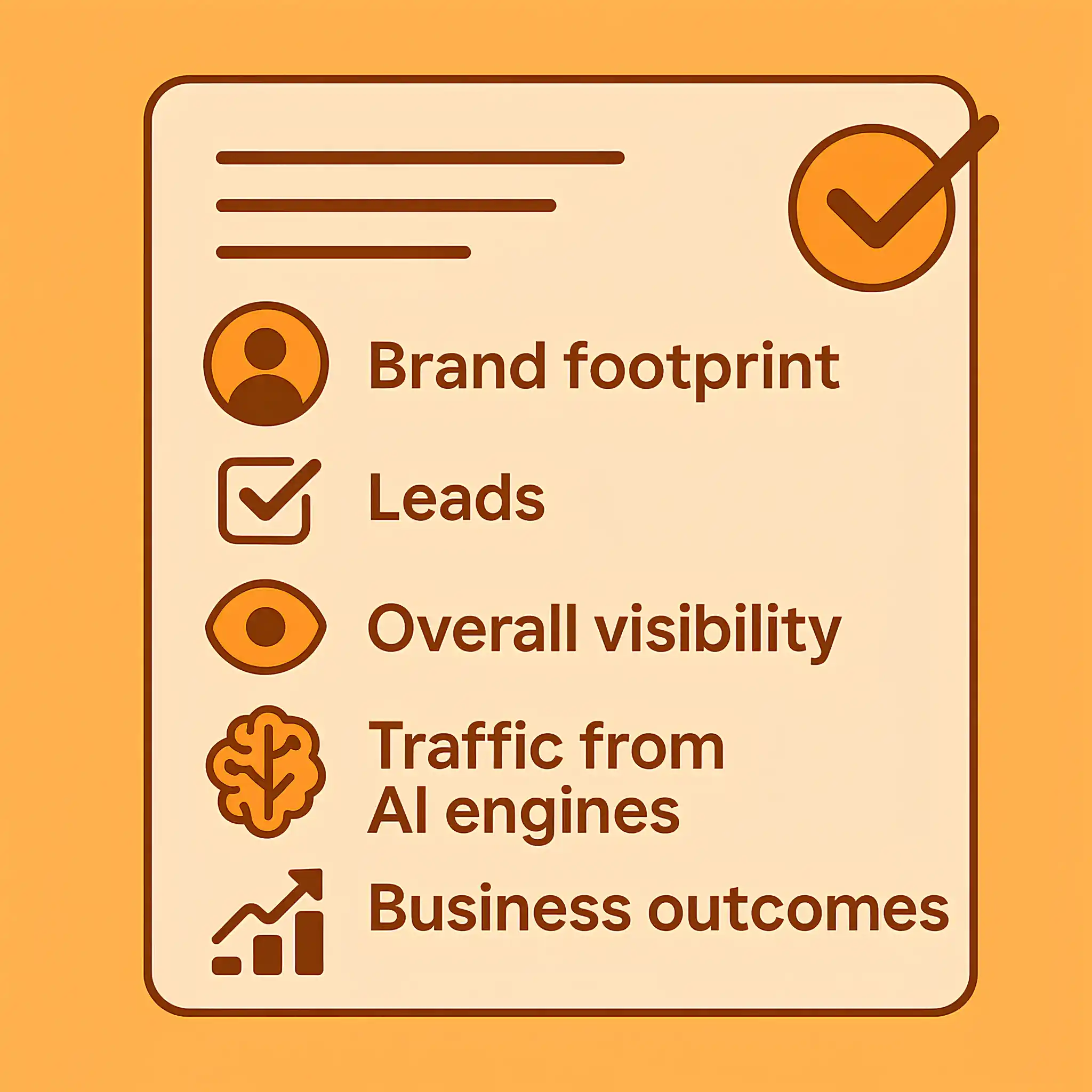
On the impact side, I focus on a mix of classic SEO signals and AI-era signals:
Search Console: impressions, clicks, CTR, and positions for the pages and queries we targeted in the audit, especially the ones likely to trigger AI Overviews.
AI search signals: more leads saying “I found you in ChatGPT/Perplexity,” more prompts where we appear in shortlists, more “oh wow, we’re on that list now” moments.
Brand footprint: new mentions, better links, stronger placements on topical sites, PR hits, podcasts, and guest posts that feed into the trust LLMs care about.
Business outcomes: demo requests, trials, form fills, sales calls. If all the “AI visibility” in the world doesn’t move these, something is wrong.
I don’t need twenty dashboards to feel progress. What I want to see, a few weeks or months after an LLM SEO audit, is simple: stronger pages, clearer signals, and more qualified people finding the brand and reaching out.
Yeah, there are a few patterns I keep seeing again and again. The first one: people treat AI SEO audits like something completely alien. They throw away everything they know from “classic” SEO and start inventing new rules. In reality, in 80% of cases, the same fundamentals still win.
Crawlability, content quality, real experience, smart internal links, strong external signals: all of that was already working for Google, Bing, and others long before LLMs. AI search didn’t cancel the basics; it just made them more important.
The second mistake is treating every single LLM as a separate planet. Many experts are trying to build one strategy “for ChatGPT,” another “for Perplexity,” another “for Gemini,” as if they need three different websites.
That’s not how I see it.
My starting point is always the same: first, optimize for real users. Make the content clear, honest, helpful, and backed by real experience. If humans trust it and can use it, traditional search engines will respond, and AI systems will have a much easier time picking it up, too.
In this SEO audit for LLMs guide, I tried to collect the things that moved the needle for my own clients. Some of them came from wins, some of them came from “okay, this totally didn’t work, let’s not repeat it.” Nothing here is 100% guaranteed, and I’m sure some tactics that work today will be weaker or completely different a year from now.
What doesn’t really change is the core: strong content with real experience behind it, high-quality backlinks from real sites, a brand people recognize, and a clean, understandable website.
These are still the main signals for AI and traditional search engines.
If you want to dominate the classic SERPs and AI search results, reach out to Digital World Institute, and let’s see how we can take your SEO game to the next level.
I don’t think you need to run a full LLM-focused audit every month. That’s overkill and honestly a waste of time. For most SaaS/B2B brands, a big, deep audit once or twice a year is enough, as long as you’re actively implementing the recommendations in between. What I do like to do more frequently is mini-checks: reviewing key pages every few months, checking new content for first-hand experience, and tracking how AI-related traffic or mentions change over time.
You should also re-open the audit if something big happens: a major redesign, a migration, a big Google change, or if you suddenly see strange shifts in impressions, CTR, or lead quality.
Yes, if you rely on any single channel too much, you’re playing a dangerous game, and that includes AI search. I love getting leads that say, “We found you on ChatGPT,” but I’d never build a business where that’s the only channel. These platforms can change how they answer questions, whose sites they trust, or what they show, and they won’t ask your permission first.
The way I think about it is simple: AI search should be one strong pillar, not the entire building. You still need organic traffic from Google, branded search, direct visits, email, social, referrals, and word of mouth.
If AI search engines drive extra visibility and leads, amazing. But if they disappear tomorrow and your whole funnel collapses, that’s a strategy problem, not an algorithm problem.
Of course, no, please don’t turn on “panic mode” and start rewriting your entire site just because AI search is getting louder. I’d rather see you fix and upgrade your most important pages first; the ones that bring leads, explain your product clearly, or cover your key topics.
Once those core pages are strong, you can slowly work through the rest. Some pieces will deserve a full rewrite, some just need a few honest examples or updated sections, and some are simply not worth keeping at all.
