


by: SEO Strategist
Ashot Nanayan
Updated December 27, 2025
6 min. read

WhatsApp
 (+1) 818 355 1889
WhatsApp
(+1) 818 355 1889
WhatsApp
(+1) 818 355 1889
WhatsApp
(+1) 818 355 1889
WhatsApp
(+1) 818 355 1889
SEO is not guaranteed (There is no way). You can do a lot of things right and still not get the expected results. However, if you work with an agency that understands advanced SEO and how search is changing with AI search, your chances grow a lot.
On the other hand, if you hire a random “SEO expert” who still does old-school tactics, buys cheap links, rewrites the same generic content, and ignores everything, you’re wasting time and budget.
In this post, I’ll walk you through 13 advanced SEO services that I consider serious work. This will help you understand what “advanced” means today, and it will also give you a way to judge any agency you’re thinking about working with.
If they don’t understand most of these or can’t show real examples, I’d be very careful. If you’re ready, let’s get started.
Whether we like it or not, a big part of search has already moved outside the classic “10 blue links.” I see it in keyword data, and I see it in real life. Queries like “AI SEO agency,” “LLM SEO optimization,” “generative engine optimization,” and a lot of related terms are growing fast. On platforms like Upwork, easily 7 out of 10 SEO jobs I come across mention AI, LLMs, or some kind of “AI search” work.
On the user side, the shift is even more obvious. Especially with younger people, many don’t even bother scrolling through a full results page. They go straight to AI Overviews, ask ChatGPT, try Perplexity, or use other LLM tools to get a quick answer and move on.
That’s why, for me, one of the first advanced SEO services today is LLM search visibility optimization. Definitely, there isn’t a single “final” playbook yet, and anyone who says they’ve found some permanent formula is lying.
But a serious agency or SEO consultant should already be testing how content appears in AI Overviews, how often a brand gets mentioned across LLMs, what type of pages tend to get picked up, and how those answers change over time.
If the SEO partner you’re talking to doesn’t even bring this topic up, they’re already behind.
Related article: SEO Audit for LLMs
Most people agree that on-page SEO is the foundation of everything. But if I’m honest, I’d say 90% of SEO professionals have either never looked at their website’s crawl budget properly or have only heard the term once or twice.
I’m not just talking about the obvious stuff like removing useless pages, cleaning up duplicates. Those are important, but they’re still the “general level” fixes.
If you open your Search Console and look at the crawl stats, you can already see a lot. You can understand what Google crawls more often, where it wastes time, whether it’s hitting resource files too much, or ignoring certain sections that are important.
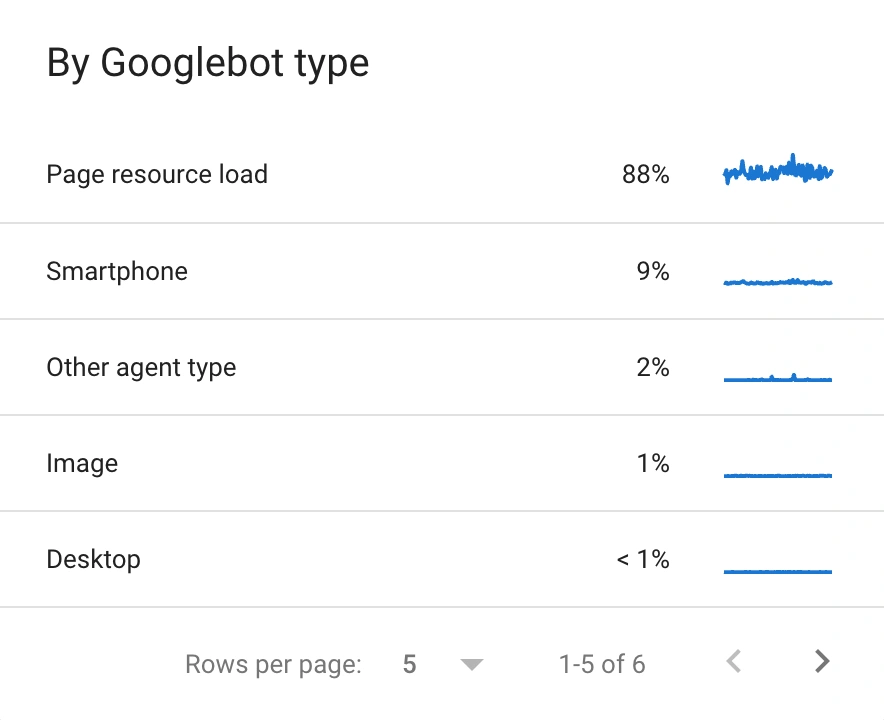
Sometimes you see strange patterns: Google keeps crawling some old folders or parameter URLs, while your newer, more valuable pages barely get any attention.
With some of our clients, we’ve had to go deep into this: mapping how bots move through the site, checking which sections get most of the crawl, and then shaping things so Google doesn’t spend half its budget on pages that make no sense.
For me, crawl budget optimization is not some exotic add-on. On larger or more complex sites, it should be in every serious SEO’s top list. If your agency has never opened the crawl stats report or doesn’t even bring this topic up, they’re leaving a lot on the table.
Log file analysis sounds very “developer-ish,” but at its core, it’s simple: your server keeps a record of every request it receives. That record is the log file. When you analyze it, you’re basically watching how Googlebot (and other bots) actually move through your site, not how we think they move based on tools and theory.
I’ve been in SEO for more than seven years now, and I didn’t touch log files in my first years. I only started really working with them maybe three years ago, using tools like Sitebulb and Screaming Frog, and it was because I had to, not because I was bored.
We had a case where important pages kept getting de-indexed, and a bunch of URLs were stuck in “crawled – currently not indexed.”

Log file analysis is not something you need every week on every small site. But if you’re dealing with a large or messy website and you see things like constant de-indexing, strange crawl behavior, or big gaps between publishing and indexing, you should absolutely consider it. It helps you answer real questions:
Which sections does Google visit the most?
Are bots wasting time on low-quality URLs, parameters, or old folders?
Do they keep hitting 404s, redirects, or very slow pages?
Are your key pages even being crawled often enough?
Most SEOs never go this far. They stop at whatever their crawler or “site audit” tool shows. But when things get complicated: indexing issues, crawl waste, constant problems that don’t match what tools say, you really need log file analysis
That’s why, for me, if you’re considering SEO in 2026, having someone who knows how to work with log files is a clear sign you’re dealing with a more advanced team.
Programmatic SEO has become one of the “go-to” ideas, especially in SaaS SEO. Everyone wants those 500, 2,000, or 10,000 extra pages: use cases, industries, templates, locations, “best tools for X,” you name it.
On paper, it sounds great. In practice, it can easily ruin everything you’ve already built if it’s done without a clear plan.
The risk grows even more when you mix programmatic SEO with platforms like Webflow, or when you add multilingual SEO on top of it. In such cases, you’re dealing with collections, dynamic templates, URL rules, translations, hreflang, and all the fun that comes with scaling anything in bulk.

The reason I consider programmatic SEO an advanced service is that it’s very easy to do average work and very hard to do it well. You have to decide what deserves its own page, how those pages are grouped, how internal linking will work, and how to avoid creating 200 versions of the same idea with one word changed.
In most cases, people grab one layout, use it in a few variables (city, industry, tool type), and that’s it.
So, yeah – advanced SEO service #3 – programmatic SEO.
Also read: Programmatic SEO for SaaS
If you’re in a competitive niche, you already know this: you’re not getting to the top with PBNs, link farms, or “SEO blogs” built only to sell links. That era is pretty much done, especially if you’re in healthcare, supplements, SaaS, security, finance, or any other sensitive space. In those niches, Google is very picky about what it trusts.
That’s why I separate basic link-building from real authority link earning. Anyone can order a batch of generic guest posts. That’s not advanced SEO.
If you’re serious, you need people who know how to earn links from real brands, real media, and real communities, not just blogs with “write for us” pages and a price list.
When I say “advanced digital PR,” I mean building linkable assets and then getting them in front of the right people. Data studies, original research, expert explainers, tools, or really good guides that journalists and bloggers want to reference.
It also includes things like HARO-style pitches, digital PR campaigns, being a guest on podcasts, giving expert quotes, and building relationships instead of targeting random placements.
Authority link earning is slower, more expensive, and much harder to scale than buying a few posts, but it builds real trust for your brand. If I were choosing a link-building agency for a competitive niche, I wouldn’t ask how many links they can “deliver per month” first.
I’d ask what kind of websites they usually secure links from, whether they’ve done digital PR campaigns before, if they can create linkable assets, and if they have experience with things like HARO, podcast outreach, and expert commentary.
If all they offer is generic guest posting on the same sites everyone else uses, that’s not advanced SEO. That’s just filling a report.
This is one of those topics you only respect after you’ve been burned or almost burned by it. We started offering SEO migration services at Digital World Institute only recently, after I personally handled a few serious migrations: both CMS-level and domain-level.
A lot of brands are moving things around. New domains, rebrands, switching from Webflow to WordPress, WordPress to Shopify, or the other way around.
For me, complex SEO migrations and replatforming are 100% in the “advanced services” category. You can’t fake experience here. You need someone who has already gone through real migrations, seen how Google reacts in the first days and weeks, and knows what kind of mistakes usually break things.

If you plan any serious change: new domain, new CMS, big redesign, I’d never treat it as “we’ll fix SEO later.” The right partner will plan the migration, map old to new URLs carefully, keep an eye on key pages, and track the numbers closely after launch instead of just celebrating that the new design is live.
That’s why I couldn’t skip this in a list of advanced SEO services for 2026. If your business depends on organic traffic and you’re about to move or rebuild your site, proper SEO migration work is not optional.
Most agencies never get there. They send nice screenshots from GA and Search Console, and that’s it. SEO analytics and attribution are advanced services because they sit between SEO, data, and development.
When do you need it? Mainly, when SEO is already a serious channel for you. If you’re investing real money every month, publishing content regularly, doing link-building, and have multiple funnels (blog → lead magnet → call, or feature page → trial → paid, etc.), you can’t afford to guess. You need to know which pages attract people who convert and which pages are just “nice traffic.”
Some examples:
A blog post brings 5,000 visits a month, but almost no one fills a form, books a demo, or starts a trial. Do you keep pushing that topic, or do you focus on something else?
Your “SEO pages” are getting visitors, but most leads come from a few boring-looking URLs no one talks about. Without proper tracking, you never see that.
You’re appearing in AI Overviews or other LLM answers, and you see traffic bumps, but you can’t tell if those visits turn into anything real.
Custom events, proper goal setup, call tracking, CRM connections, cleaning UTM mess, building reports that make sense; all these are very important and advanced.
Sometimes it even means working with your devs to track product actions (successful signups, key feature usage, upgrades) and tie them back to the original landing page or keyword group.
Not everyone is ready for this, and that’s fine. If you don’t have clear offers, a stable product, or a basic analytics setup, going straight into complex attribution will just confuse things.
But if you’re past the “early chaos” stage and SEO is one of your main acquisition channels, you should seriously consider it.
International and multilingual SEO looks sexy at first glance (OMG, I said it). New markets, more traffic, and leads. But this is one of the hardest areas in SEO, and definitely not something every SEO agency should touch.
You have to make decisions around domains and structure (ccTLDs vs subfolders vs subdomains), hreflang, geo-targeting, local content, local links, and sometimes even different products or pricing by region.
One wrong setup can create a huge mess: duplicate versions, wrong country pages ranking, or Google ignoring the “right” version of the site.
That’s why I put international and multilingual SEO into the advanced services list. To do it well, you need three things at the same time: strong technical skills, real SEO experience, and people who deeply know the target language and culture.
If you’re planning to go international, work with people who have real SEO case studies in your target markets and actual native-level support for those languages.
If an agency claims they “do everything” in every language but can’t show projects, run.
JavaScript SEO (I don’t like it, honestly) is one of those topics that looks simple from the outside and then punches you in the face when you start working on a project.
Single-page apps (React, Vue, Angular, etc.) are great for users and developers, but they can easily confuse search engines if things are not set up carefully.
A lot of SPAs don’t give search engines real HTML content on the first load. Everything is built in the browser with JavaScript. For users, that feels smooth. For bots, if rendering isn’t handled properly, it can mean empty pages
On top of that, you have client-side routing, dynamic URLs, and different states that aren’t always visible to crawlers.
If you’re hiring an SEO agency for a JavaScript-heavy site, I would never work with someone who has only done “normal” WordPress SEO.

“Check what competitors do and copy them,” no, my friend. Those days are in the past. Proper gap exploration is not everyone’s thing, and you definitely won’t get it from a cheap SEO package.
When I talk about competitive intelligence, I mean a few things at the same time: deep content gap analysis, link gap analysis, and very sharp SERP overlap checks. It’s not just exporting keyword lists from Ahrefs and highlighting the ones you don’t rank for.
It’s understanding why those pages work, what type of intent they cover, where they’re strong, and, more importantly, where they’re weak.
The goal is to find realistic openings where a smaller or newer brand can come in and compete instead of trying to fight them on their strongest keywords from day one.
The same logic applies to the other stuff. So yeah, it is in my “advanced SEO services” list because it takes time, judgment, and experience.
Also read: Affordable SEO Services: Pros & Cons
The basic rules of SEO don’t change from niche to niche. But once you move into marketplaces and aggregators: jobs, real estate, directories, any kind of listing site, the complexity jumps to another level. If you don’t have experience here, it’s very easy to break things.
You’re dealing with filters, sorting, pagination, internal search, dynamic URLs, city/area/category pages, and all kinds of combinations that can explode into thousands of variations.
Then you have to decide what should be indexable, what should be canonicalized, what should be blocked, and how to build a clean structure out of all that.
That’s why marketplace and aggregator SEO is on my advanced list. It requires a mix of strong technical skills, product thinking, and hands-on experience with large, dynamic sites.
I would never wish a penalty or serious traffic drop on anyone. But if it already happened, the only thing I’d wish for you is to either have the skills yourself or find someone very advanced who can help you recover.
Recovering from a manual action, a heavy algorithm hit, or a big drop is complicated because the reason is rarely one single thing. Sometimes it’s a history of risky links finally catching up. Sometimes it’s a content quality and intent mismatch.
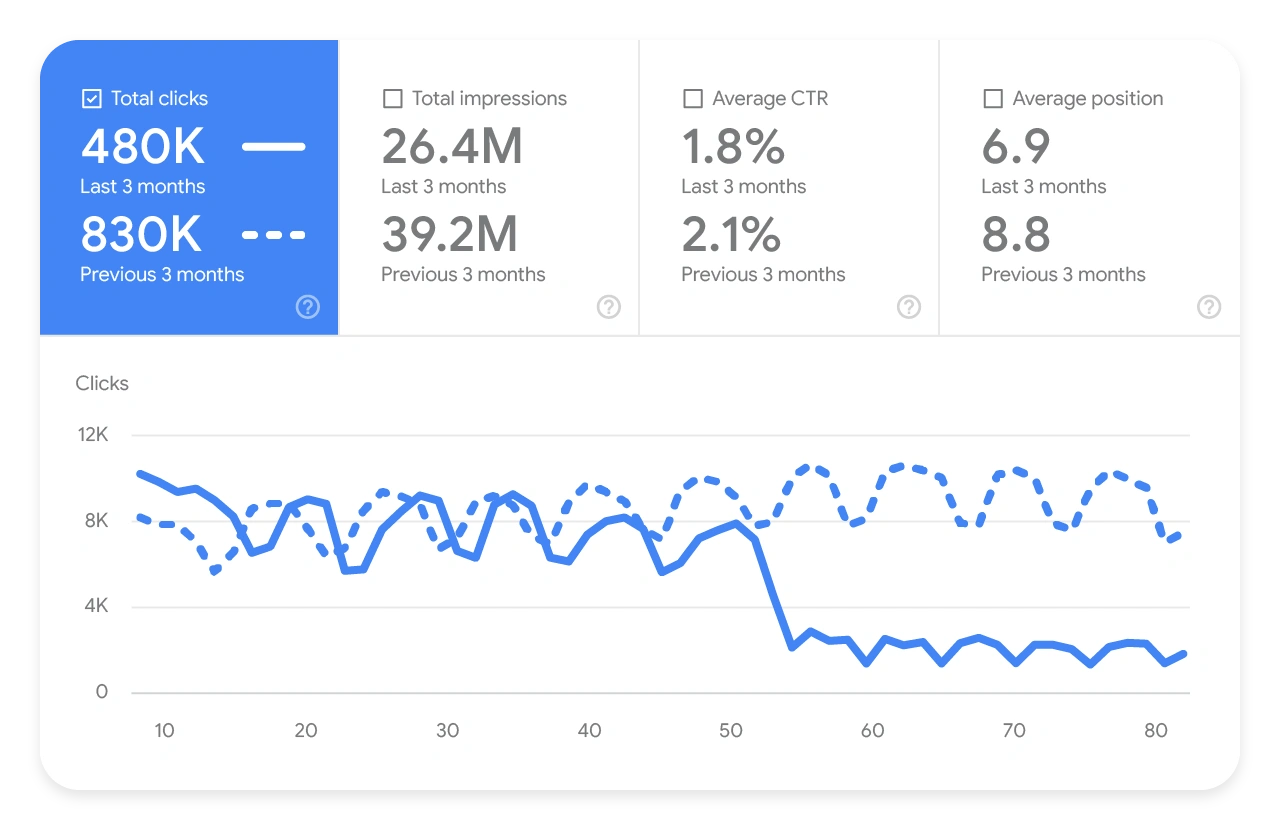
In my view, this kind of work must be in any “advanced SEO services” list today. It requires deep audits, tough decisions (what to cut, what to rebuild, what to disavow, where to slow down), and a clear plan over months, not weeks.
To choose the right partner for this, I’d ask two simple things: have you handled a case like this before, and what did you change to fix it? If they can’t explain it in clear, concrete language, they probably haven’t.
We’re almost in 2026, and SEO doesn’t look like it did even two or three years ago. A lot of things that used to eat hours of manual work are now getting automated with AI and different tools. As a business owner, you can’t ignore that.
If you’re investing real money in SEO, you should also be asking: how can we do this faster, cleaner, and without wasting budget on tasks that a script or workflow can handle?
For me, SEO automation is an advanced service because it’s not just “use AI to write 500 articles.”
That’s the fastest way to destroy a domain. The real value is in automating the parts around the work: reporting, monitoring, quality checks, internal link opportunities, alerting when key pages drop, tracking AI Overview visibility, pulling data from multiple tools, cleaning it, and turning it into something your team can act on.

Done well, it saves your senior people from boring tasks and lets them think instead of copy-pasting from spreadsheets all day.
The challenge is to automate without killing quality. You need an SEO team or expert who understands both sides: how to build or connect tools, and what should still stay in human hands.
They should be honest about where automation helps (checking thousands of pages, catching issues early, speeding up briefs) and where it doesn’t (strategy, positioning, real editing, sensitive YMYL topics, etc.).
If the agency you’re talking to only uses tools at a “basic user” level and has no idea how to set up custom workflows, tag systems, or alerts, they’re not really doing advanced automation.
If you’re interested in going deeper on this topic, I have another guide where I walk through practical ways to automate parts of your SEO with AI without destroying quality. It’s a good next step if you want to see how this looks in real life.
In this guide, I tried to put together the main advanced SEO services I believe you should consider in 2026. The list is not final. Every website, every industry, every mess you’ve inherited from past “SEO work” needs its own mix of tactics, tests, and decisions.
But if your agency or freelancer has never even heard of half of the things we covered here, that’s a clear sign you’re not getting really advanced work.
If you’re looking for an advanced SEO agency that does this stuff in real projects, and you want the work done properly without endless theory and excuses, feel free to reach out to us at Digital World Institute. Tell us a bit about your website and goals, and we’ll put together a custom proposal based on where you are and what you need.
